FUNDRAISING DEADLINE EXTENDED! SUPPORT THIS PROJECT TODAY!


FAQs
Learn how your contribution keeps the trail alive and our towns connected.
Where is the Teton Pass Trail?
The entire trail spans from Wilson, Wyoming to Victor, Idaho, crossing Teton Pass via a series of connected
pathways and shared-use county road segments. Completed sections already serve both communities. This key segment—3.6 miles between Trail Creek Campground and Coal Creek Trailhead—will get us a major step closer to closing the gap and make the full route continuous, safe and accessible.
Why does the community need to raise $5 million?
Construction costs have risen dramatically since the BUILD grant was awarded in 2020. During that same time, federal and state funds for local government needs have declined. While over nearly $8 million in federal, state, and local funding has already been secured, the cost estimate is $13.5 million. This last $5 million is essential to complete the connection. If $5 million is raised, an additional $1 million in federal grant funding will be unlocked for the construction of the Coal Creek pedestrian underpass.
Why does this connection make a difference in our Teton Counties?
This trail reflects who we already are: two valleys that live, work, recreate, and raise families together. It offers a safer alternative to the Teton Pass Highway 22 for non-drivers. It promotes public land access, active lifestyles, and economic vitality. Above all, it’s a shared legacy project—connecting our communities in a way that honors history and shapes the future.
How soon will the trail be constructed?
Plans are complete. Construction is shovel-ready and can begin as soon as bids are awarded and the snow melts in spring 2026; with a successful campaign, the full connection can be substantially completed by late fall, 100% finished by June 2027.
What happens if the campaign does not raise $5 million?
100% of the donations will still go to construction, and every dollar will build more trail and get closer to the goal to reach Coal Creek. Should the final amount fall short, all funds raised will still fully go towards trail construction. Any section unfunded this time will be prioritized for the next opportunity for grant funding to finish the job.
Who can use the trails?
The trail is open to all non-motorized users: walkers, runners, hikers, cyclists, mountain bikers, equestrians, skiers, families with strollers, adaptive athletes, and anyone seeking a safer, scenic way to move through the Tetons on foot or bike.
How is the trail different from biking and walking along the highway?
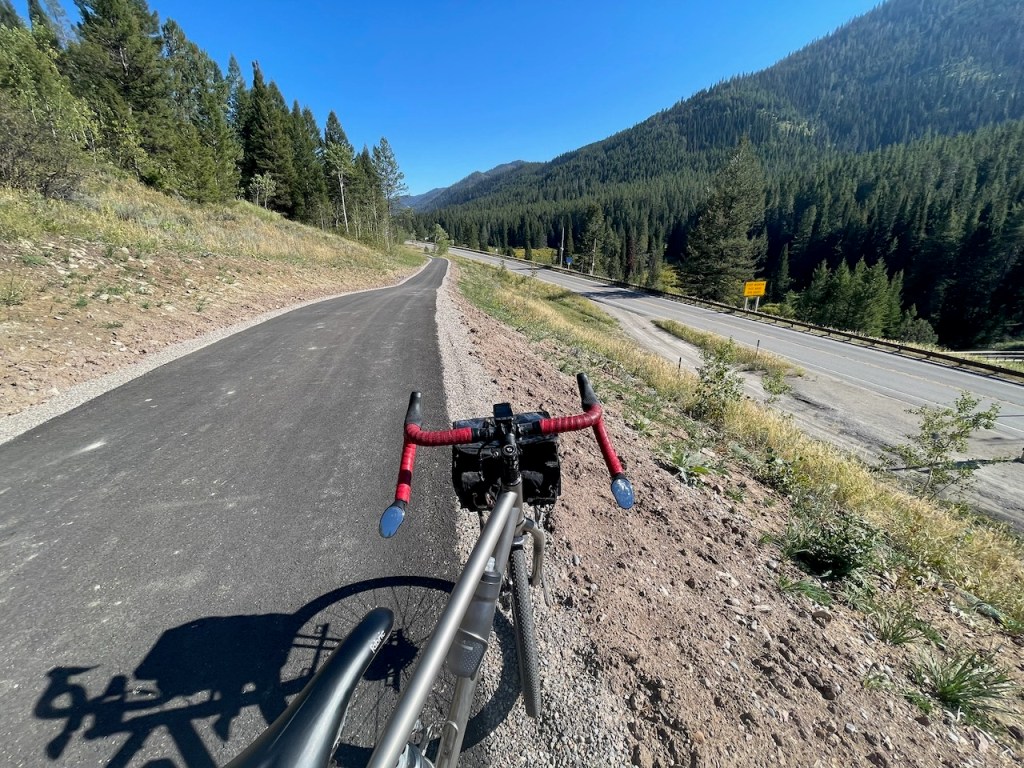
The pathway separates people biking and walking from the busy high-speed highway. It offers a safe and enjoyable route along Trail Creek through public lands—with underpass highway crossings and a direct connection between trail systems in both states.
What are the plans for the section from Coal Creek to the top of Teton Pass?
Future planning is needed for that 2.5-mile section. There is an existing 2-mile section of the historic Old Pass Road west side in good shape, from Coal Creek to near the top that can be explored.
Why isn’t the project funded by the government?
The local government partners in the Teton Mobility BUILD grant have contributed significant match funding to all the projects, and substantial federal grants are approved for the Teton Pass Trail. However, cost estimates now exceed those sources. Full funding requires local initiative and private support to fill the gap left by public sources.
Are donations tax-deductible?
Yes. Donations to the Save Teton Pass Trail campaign are tax-deductible to the extent allowed by law. You will receive a receipt for your records. The Community Foundation of Jackson Hole is managing funds, with donations accepted at tetonpass.org. Checks can be made to: ‘Save Teton Pass Trail’ and sent to the Community Foundation, PO Box 574, Jackson WY 83001.
How can I stay connected to this project?
Visit TetonPass.org to sign up for updates, track progress, and follow us on social media. We’ll share stories, milestones, and ways to get involved.
Who do I contact if I have more questions about this project?
For questions, please reach out to our team at info@tetonpass.org. We’d love to connect.
How will my donation be used?
Every dollar raised goes directly to the construction of the final 3.6-mile trail segment from Trail Creek Campground to Coal Creek Trailhead. Funds cover materials, labor, safety features, and required infrastructure like the Coal Creek underpass. Your support closes the final gap in this legacy connection.
What’s already been built, and, what’s left?
Substantial sections between Wilson to Victor are already complete. The Teton Pass Trail is complete from Wilson up the Old Pass Road to Teton Pass Summit, and from Victor via the Old Jackson Highway to the new pathway segment terminating at the Trail Creek Campground. What remains is this most critical stretch over rugged terrain where a safe alternative to the highway is most needed.
Who is leading this effort?
The campaign is led by a volunteer coalition of local advocates, planners, and nonprofits from Teton County WY and Teton County ID. It has the support of Teton County WY and ID, the cities on both sides of the pass, the US Forest Service, and regional partners in the Greater Yellowstone Trail effort. It’s powered by neighbors, not agencies.
How do you know this trail will be built on time and as planned?
All engineering, permits, and environmental reviews are complete. The project is shovel ready. If fully funded, construction will begin spring 2026 and be substantially completed by fall. It’s a professionally managed, federally approved construction project with detailed design plans already in hand. The successful contractor will be required to meet strict deadlines for the BUILD grant funds.
Why does the trail cost so much?
This portion of the pathway is regarded by engineers as the most ambitious and technically complex section ever proposed in Teton County’s pathway system. It navigates steep terrain and side slopes requiring extensive retaining walls to route the pathway between Trail Creek wetlands and Highway 22, and a highway underpass at Coal Creek—an achievement in design and environmental stewardship that has taken years to prepare. The pathway will be 10’ wide, paved, and built to federal standards for multi-use, year-round access.
Will this trail impact wildlife or public lands?
The trail has undergone full environmental review and was designed in collaboration with the U.S. Forest Service to minimize impacts. It primarily follows existing forest roads and disturbed corridors. By providing a managed route, it may even reduce off-trail and roadside use.
How will this benefit the community long-term?
The trail enhances local quality of life, public safety, tourism, and access to nature. It supports outdoor recreation economies, reduces highway risk, and gives future generations a lasting piece of shared infrastructure. It’s a win for both valleys and all who live in the Tetons.
What happens if we don’t raise the $5 million?
If we don’t close the gap by December 31, 2025, we risk losing federal matching funds and delaying or downsizing the project. This is a time-sensitive, all-hands-on-deck moment—one final push to complete what’s already in motion.